Picture a quiet corner in your home where the day slows down just a bit. Sunlight slips through the window, and you ease into a gentle stretch that feels like a soft sigh. Home yoga brings that calm right to you—no studio needed, no fancy schedule.
If life feels busy, this fits easily. A few minutes can settle your breath and loosen what’s tight. It’s not about perfect poses; it’s about listening to your body in a kind way.
As someone who’s shared these simple moves with friends over coffee, I know starting small works best. You might feel a little wobbly at first, and that’s okay. Let’s walk through quiet steps to make it your own.
Many find it pairs well with everyday ease, like the ideas in Quick Tips for Reducing Daily Stress. It supports that steady calm without extra effort.
Finding a Quiet Corner at Home
Look for a spot that feels soft and open. A patch of carpet in the living room or bedroom works fine. Clear away a few things to let space breathe.
Let in natural light if you can. It warms the room gently. If mornings suit you, try near a window as the day wakes up.
No need for perfection here. Just a place where you won’t bump into furniture. This simple setup invites your body to settle without distraction.
Over time, it becomes a familiar nook. You’ll notice how returning there quiets the mind naturally. Keep it simple, like folding a towel nearby for comfort.
Gathering Gentle Supports
Start with clothes that move easily—soft pants and a tee you already own. Nothing tight or new. Comfort lets you focus on the breath.
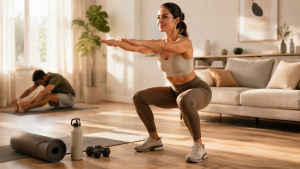
A yoga mat is nice but optional. Use a folded blanket or bath towel instead. It cushions your knees and back softly.
Water nearby keeps you hydrated. Dim the lights if it helps you unwind. These small choices make the practice feel welcoming from the start.
I’ve guided friends who grabbed whatever was handy. It always works. The less you fuss, the more you flow.
Softening into Your First Breaths
Sit comfortably on your spot, legs crossed or knees wide. Place hands on your knees, palms up. Close your eyes softly if it feels right.
Inhale through your nose for a count of four, feeling your belly rise. Exhale slowly for six, letting shoulders drop. Repeat five times.
This centers you before any movement. Notice thoughts drifting; gently bring back to the breath. It’s like a quiet anchor for what comes next.
Practice this anytime—waiting for tea to brew or before bed. It builds a habit of ease. Your body thanks you with each soft release.
When mornings call, blend it with a Morning Self-Care Routine to Boost Mood. That gentle start sets a peaceful tone.
Easing Through a Simple Sequence
This four-step flow takes about ten minutes. Move with your breath, no rush. Let each pose support you like a friend’s hand.
Begin where you feel safe. If a knee twinges, fold a blanket under it. Breathe steadily through it all.
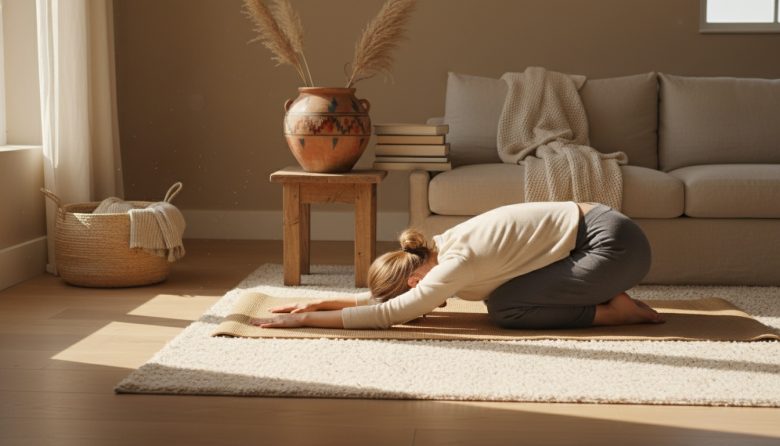
- Child’s Pose: Kneel down, toes touching, knees wide apart. Fold forward, forehead to the floor or a pillow. Arms stretch ahead or rest by your sides. Breathe deeply here for five full breaths. Feel your back soften and worries melt away. Stay as long as feels good, maybe a full minute if you like.
- Cat-Cow Flow: Come to hands and knees, wrists under shoulders, knees under hips. Inhale, arch your back low, lift head and tailbone. Exhale, round your spine up, tuck chin to chest. Flow slowly five times, matching breath to movement. This wakes your spine gently, like a soft wave rolling through.
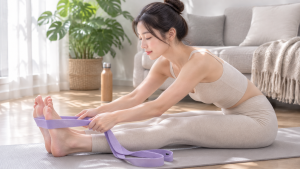
- Seated Forward Fold: Sit tall with legs stretched out front, feet flexed. Inhale to lengthen your spine, then exhale as you hinge forward from the hips. Hands rest on shins or floor—don’t force it. Hold for five breaths, letting hamstrings ease bit by bit. Bend knees if tight; the goal is calm, not reach.
- Rest in Corpse Pose: Lie back fully, arms by sides, palms up. Legs apart, feet flop open. Eyes closed or soft gaze up. Notice your breath for one minute or more. This seals the flow, letting everything settle deeply into rest.
Transition smoothly between each. Pause if needed. This sequence builds quiet strength over time.
Building a Short Daily Flow
Link these poses into a ten-minute routine. Do it three mornings a week to start. Evenings work too, easing you toward sleep.
Time it loosely—after coffee or before dinner. Set a soft timer if it helps. Consistency comes without pressure.
Shorten or lengthen as days vary. One week might be five minutes; another full flow. Your body guides the rhythm.
Pair with steady nourishment from 8 Simple Foods for Steady Energy Levels. It fuels the practice naturally.
Track how you feel after. A quick note in your phone reminds you of the shift. Small routines like this weave in easily.
Listening Softly to Your Body
Notice what feels good, what asks for a pause. Bend knees in folds if hamstrings pull. Use props to support.
If something aches sharply, stop gently. Breathe and rest. Tomorrow is another chance.
Be kind on off days. Stiffness fades with patience. Modifications make it yours forever.
This listening builds trust. Your body speaks quietly; honor it.
Carrying Calm Beyond the Mat
Take the breath from practice into your walk to the kitchen. Notice steps softening. Let it linger through meetings or chores.
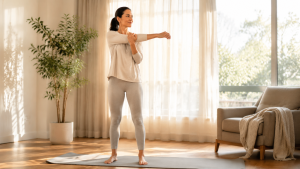
When stress nudges, drop into Child’s Pose for a breath. Or stand tall, roll shoulders back. These moments extend the calm.
Share with a friend—try together once a week. Laughter mixes with the stretches. It deepens the ease.
Over weeks, you’ll feel steadier overall. Sleep improves, moods lift softly. Pick one way to carry it tomorrow; be kind if you forget.
Consistency without force works wonders. Let yoga ripple out naturally.
Frequently Asked Questions
Do I need any equipment to start?
No special gear required. A clear floor spot is enough. Fold a blanket or towel for cushion if you want extra softness under knees or back.
It keeps things simple and close to home. You already have what matters.
How often should I practice as a beginner?
Aim for ten minutes a few times a week. Let it match your natural flow—no strict rules. Some days less, others more; both are fine.
Listen to what feels supportive. It builds gently over time.
What if I feel stiff or have minor aches?
Shorten the holds and breathe deeply into tight spots. Bend knees or use a chair for support. Ease off if pain sharpens, and see a doctor for anything ongoing.
Your safety comes first. Gentle adjustments make it sustainable.
Can I do this if I’m not flexible?
Absolutely—yoga welcomes everyone as they are. Focus on steady breath, not deep bends. Poses adapt to you, building ease gradually.
Flexibility grows as a quiet side effect. Meet yourself right here.
How do I know if I’m doing it right?
It feels steady and supportive, not strained or rushed. Breath flows even, body relaxes into holds. Check free videos for visual cues if helpful.
Trust your quiet inner sense. That’s your best guide.