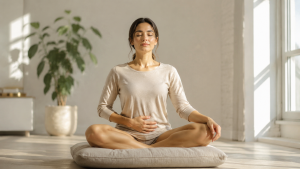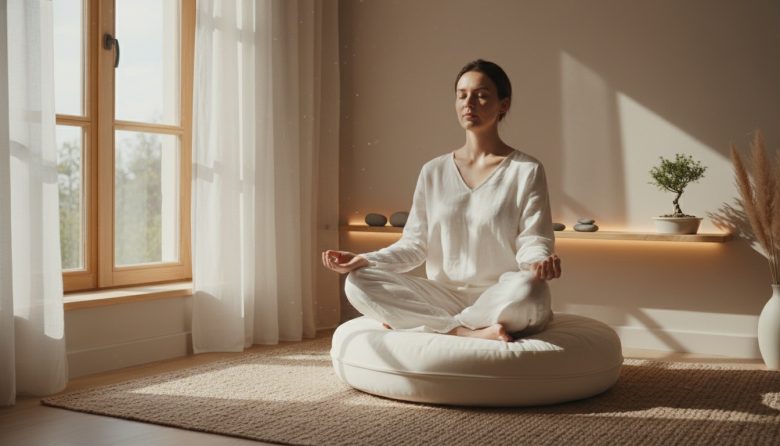
Picture this: your day eases open with just five quiet minutes, no rush, no perfection needed. Amid the usual swirl of emails, kids' chatter, or that endless to-do list, I once carved out a spot by my kitchen window. One breath led to another, and suddenly, the chaos softened. As someone who's fumbled through distracted mornings, I can tell you—home meditation isn't about emptying your mind. It's a gentle pause that supports whatever comes next.
These small moments build like quiet friends showing up daily. No fancy gear or hours required. Just you, a soft seat, and your natural breath. Let's ease into it together, step by soft step. You'll find it fits right into your world, softening edges without any pressure.
I've shared this with friends juggling full lives, and they light up saying how it settles their rush. Ready to try? One breath at a time, right here at home.
Finding Your Soft Corner at Home
Your meditation spot doesn't need to be a temple. Pick a chair by the window where morning light filters in softly, or the edge of your bed at day's end. These everyday places hold you just fine.
Add a cushion if it feels good, or dim the lamp for a cozier feel. When setting up a cozy corner for home workouts, the same simple touches work wonders here—think a folded blanket and a plant nearby. Keep it minimal so it invites you back without effort.
Experiment gently. Sit for a moment tomorrow and notice what supports you. Let the space settle around you like a warm hug.
This corner becomes your anchor. Over time, seeing it nudges you toward stillness amid the bustle. No big changes—just a soft welcome home.
Easing into a Daily Quiet Moment
Choose a time that whispers to you, like the first light of morning or the calm before bed. Start with three to five minutes; it's enough to soften your start or end.
Pair it with something familiar, such as after your coffee or while the house still sleeps. If mornings feel nourishing, blend it with a quick routine from how to make nutritious smoothies in under five minutes—sip slowly, then sit.
Let the habit grow on its own. One day it might stretch naturally; another, it's perfect as is. The key is showing up kindly, day by day.
This rhythm supports your body's natural flow. No alarms or strict schedules. Just a gentle slot that eases you in.
Letting Your Body Settle Naturally
Find a posture that holds you without strain. Sit cross-legged on the floor if it feels steady, or use a chair with feet flat. Lying down works too, especially if tension lingers.
Soften your shoulders down from your ears. Rest your hands on your lap, palms open or relaxed. Check in: is your back gently supported? Adjust as needed.
- Close your eyes softly, or keep them half-open gazing down.
- Let your jaw loosen, tongue rest easy.
- Breathe into your belly for a natural rise and fall.
These small shifts help your body settle. No perfect pose required—just enough ease to stay for a few breaths. Feel the support beneath you.
Breath as Your Gentle Guide
Your breath is always there, a quiet companion. Notice the air easing in through your nose, filling softly, then slipping out. No need to change it; just watch.
If it feels elusive, place a hand on your belly to sense the gentle movement. Inhale like a soft wave arriving; exhale as it recedes. This anchors you without force.
Wandering thoughts pull you away? That's fine—return to the breath like coming home. It guides you back, steady and kind.
Over sits, this noticing deepens naturally. Your breath becomes a friend, supporting calm amid the day's flow. Stay curious about its rhythm.
Your First Four Steps to Sit
Here's a simple flow for your first five-minute session. Follow these steps at your pace, letting each one unfold.
- Arrive and pause. Sit in your spot, eyes soft or closed, let the room hold you for three breaths. Feel the shift from motion to stillness.
- Feel your seat. Notice where your body meets the surface, softening any effort. Let gravity settle you deeper.
- Watch the breath. Let inhales and exhales come on their own, like waves touching shore. Stay with the sensation at your nose or belly.
- End with kindness. Open your eyes slowly, carry the calm into your next moment. Smile at yourself for showing up.
This sequence fits anywhere. Repeat it daily, and watch how it softens your inner world.
Welcoming a Wandering Mind
A busy mind is part of the sitting. Thoughts about lunch, work, or yesterday drift in—that's normal. Welcome them without judgment, then guide back to breath.
It's like clouds passing in the sky. You don't chase them; you let them float by. This gentle return builds the habit of presence.
Try this small checklist when distractions arise:
- Acknowledge the thought lightly.
- Label it if helpful: "planning" or "memory."
- Return to breath with a soft exhale.
Be kind—each return is progress. No need to fight the wander. Over time, the mind settles more easily.
Carrying Stillness into Your Day
Meditation doesn't end when you stand. Pause for one breath before emails or meals. Notice it during a walk or chat.
These micro-moments weave calm through your hours. Pair a breath with brushing teeth or waiting for the kettle. It all adds up softly.
Consider blending it with a straightforward meal plan for healthier eating—eat mindfully, one bite at a time. Tomorrow, pick one spot to pause. Notice how it feels.
Be gentle with yourself. This stillness travels with you, easing the day without extra effort.
Frequently Asked Questions
Is it normal if my mind wanders a lot?
Yes, completely—it's how minds work, especially at first. Every time you notice and return to your breath, you're strengthening that gentle muscle of awareness. Over days, the wanders space out naturally, but always welcome them as part of the practice. No need to push; softness is the way.
How long should I meditate at first?
Three to five minutes feels kind and sustainable for beginners. It lets you build without overwhelm, easing into longer sits if it calls you. Listen to your energy—some days shorter is perfect. The consistency matters more than minutes.
Do I need cushions or apps to start?
Not at all—a simple chair, floor, or even your bed works beautifully. Cushions add comfort if you like, but your own body and breath are the true supports. Apps can offer gentle guidance later, yet starting solo builds quiet confidence right away.
What if I feel restless or sleepy?
That's common and okay—bodies adjust in their time. For restlessness, try eyes half-open or a brief walk beforehand; sleepiness might ease with morning light or upright posture. Experiment kindly until it supports you, always honoring what your body shares.
Can anyone do this, even with a busy life?
Absolutely—these short sits slip into the smallest gaps, like waiting for toast or between meetings. One breath counts as a full win, fitting any schedule. Be patient with yourself; this practice grows around your life, softening it gently.