Your Protein Target: The Simple Formula That Ends the Guesswork
If you are asking how to add protein to your diet, you likely already know that protein helps with muscle repair, keeps you full, and supports metabolism. But the real question is: how much do you actually need, and how do you get it without turning every meal into a scrambled-egg circus? The answer is not "more is always better" - it is about hitting a specific number based on your body weight and activity level.
Here is the formula I use with clients and myself: multiply your body weight in kilograms by a factor that depends on your lifestyle. For a sedentary adult, the recommended dietary allowance is 0.8 grams per kilogram of body weight per day, according to the National Academies of Sciences, Engineering, and Medicine. But if you exercise regularly, lift weights, or are over 65, you need more - typically 1.2 to 2.2 grams per kilogram.
Let me make this concrete. A 70 kg (154 lb) person who works out three times a week should aim for roughly 1.6 g/kg, which is 112 grams of protein per day. That sounds like a lot, but it is about 30 grams per meal plus a 20-gram snack. If you have no idea what 30 grams looks like, think of a chicken breast the size of your palm or two large eggs plus a cup of Greek yogurt.
Most people do not realize that the RDA of 0.8 g/kg is designed to prevent deficiency, not to optimize muscle growth or weight loss. If you are active, you are cheating yourself by eating at that level.
I learned this the hard way. When I first started training seriously, I was eating about 60 grams a day and wondering why I was always sore and never putting on muscle. It took a coach to point out that I was under-eating protein by half. Once I adjusted, the difference was night and day - not just in the gym, but in my energy and recovery.
If you want a quick way to check how much protein is in a specific food you already eat, tools like our Greek Protein Calculator can help you see the exact grams per serving. But the real magic is in choosing foods with high protein density, which I will break down next.
Protein Density: The Secret to Eating More Without Blowing Up Your Calories
When you are trying to add protein to your diet, the first mistake most people make is reaching for protein bars and shakes. They look convenient, but they are often low in protein density - meaning they give you a lot of calories for relatively few grams of protein. A typical protein bar has 200 calories and 20 grams of protein, which is 10 grams per 100 calories. That is decent, but a plain chicken breast has about 31 grams per 100 calories - triple the density.
Protein density is the number of grams of protein per 100 calories. The higher the number, the more protein you get for every calorie you eat. This matters if you are trying to build muscle without gaining fat, or if you want to stay full while cutting calories. It also helps you make smarter choices on a budget, because you can compare foods by the protein you get per dollar.
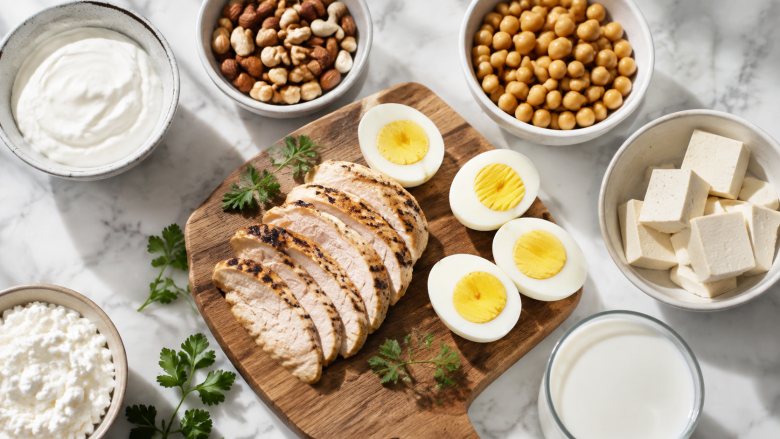
Here is a quick comparison of common protein sources, ranked by protein density (grams per 100 calories):
- Egg whites: 17 g protein per 100 calories
- Chicken breast (skinless): 31 g protein per 100 calories
- Turkey breast: 29 g
- Greek yogurt (non-fat): 10 g - but note a typical serving is 100-150 calories, so you get 10-15 g easily
- Cottage cheese (low-fat): 11 g
- Tofu (firm): 12 g
- Edamame: 11 g
- Lentils (cooked): 9 g
- Black beans: 6 g
- Almonds: 13 g (but high in fat, so portion control matters)
- Peanut butter: 4 g - yes, it is low density, so do not rely on it for protein
Notice that nuts and seeds are not great protein sources per calorie. They are healthy in other ways, but if you are eating a handful of almonds to hit your protein goal, you are also eating 200 calories of fat. That is fine if you are bulking, but it is inefficient for someone who wants to add protein without eating too many calories.
The thing nobody tells you about protein density is that it changes how you plan meals. Instead of thinking "I need to eat more protein," you start thinking "I need to choose foods that give me the most protein for the least calories and cost." That shift alone will double your protein intake without you feeling like you are force-feeding yourself.
15 Easy Swaps That Add Protein Without Overhauling Your Kitchen
You do not need to eat six meals a day or buy a tub of whey powder to boost your protein. The fastest way is to swap one low-protein ingredient for a higher-protein version in meals you already eat. Here are the swaps I recommend to clients, along with the exact protein boost you get.
Breakfast
- Swap regular oatmeal for rolled oats cooked in milk (instead of water) and stir in a scoop of Greek yogurt. That adds 8-10 grams of protein.
- Use two whole eggs plus two egg whites instead of three whole eggs. You get the same volume with more protein and less fat.
- Spread cottage cheese on toast instead of butter. Half a cup of cottage cheese has 14 grams of protein, while butter has zero.
- Add a scoop of collagen or whey protein to your coffee. It dissolves without changing the taste much and adds 20 grams.
Lunch and Dinner
- Use Greek yogurt or blended cottage cheese as a base for salad dressing instead of mayonnaise. A quarter cup of Greek yogurt adds 5 grams.
- Mix canned tuna with Greek yogurt instead of mayonnaise. You add 5 grams and cut calories.
- Swap regular pasta for lentil or chickpea pasta. One serving of chickpea pasta has 14 grams of protein versus 7 grams in regular pasta.
- Add a handful of edamame to your stir-fry. Half a cup adds 9 grams.
- Use ground turkey or lean beef instead of regular ground beef in tacos. The difference is about 5 grams per serving.
- Top your salad with pumpkin seeds or hemp hearts instead of croutons. Two tablespoons of hemp hearts add 6 grams.
Snacks
- Swap a granola bar for a boiled egg. You get 6 grams instead of 2.
- Dip apple slices in peanut butter - but also add a scoop of Greek yogurt to the dip. That extra dollop adds 5 grams.
- Choose beef jerky over pretzels. An ounce of jerky has 15 grams.
- Make your own protein smoothie with milk, banana, and a scoop of powder, instead of buying a bottled fruit juice.
- Snack on roasted chickpeas. A half cup has 7 grams, and they are crunchy and savory.
These are not revolutionary ideas, but the key is to stack them. If you do three swaps a day, you add 30-40 grams of protein without changing your meal plan drastically. That is the difference between hitting your target and falling short.
Plant-Based Protein: How to Get Complete Proteins Without Meat
If you are vegetarian or just want to reduce meat intake, you can absolutely hit your protein target - but you need to understand the concept of complete versus incomplete proteins. Animal proteins are complete because they contain all nine essential amino acids in sufficient amounts. Most plant proteins are incomplete, meaning they are low in one or more of those amino acids. For example, rice is low in lysine, while beans are low in methionine. But if you eat them together, they complement each other and form a complete protein.
The old rule was to combine complementary proteins at every meal, like rice and beans, or hummus and pita. Research now shows that your body can pool amino acids from different meals over the course of a day, so you do not need to be obsessive about pairing at each sitting. According to the Harvard T.H. Chan School of Public Health, as long as you eat a variety of plant proteins throughout the day, you will get all the amino acids you need.
That said, there are some classic pairings that are culturally delicious and practical:
- Rice and beans (the classic - lysine from beans, methionine from rice)
- Hummus and whole-grain pita
- Peanut butter on whole-wheat bread
- Lentil soup with a side of rice
- Corn and black beans in a salad
- Chickpea and quinoa salad (quinoa is actually a complete protein on its own)
One more thing to know: soy is a complete plant protein. Tofu, tempeh, and edamame are all excellent sources. A 100-gram serving of firm tofu has 12 grams of protein and about 70 calories, making it one of the best plant-based protein densities. Tempeh is even higher - about 20 grams per 100 grams.
If you are vegan and worried about getting enough leucine - the amino acid that triggers muscle protein synthesis - you can still do it. Leucine is found in soy, pumpkin seeds, and lentils. A serving of edamame has about 0.4 grams of leucine, which is not as high as chicken (2 grams), but you can compensate by eating slightly larger portions or combining sources.
Timing: When to Eat Protein to Maximize Muscle and Satiety
You might think that as long as you hit your daily total, timing does not matter. For simple weight loss and general health, that is mostly true - your body will use the protein you give it over 24 hours. But if you are active, especially if you lift weights, timing can make a difference in recovery and muscle growth.
The most studied window is the post-workout period. Eating 20-40 grams of protein within 2 hours after exercise stimulates muscle protein synthesis more than eating the same amount later. A 2017 review in the Journal of the International Society of Sports Nutrition found that consuming protein right after resistance training improves muscle hypertrophy and strength gains. But do not panic if you miss the window - the total daily intake is still more important.
What matters more for most people is spreading protein evenly across meals. If you eat 10 grams at breakfast, 20 at lunch, and 60 at dinner, your body can only use a limited amount at once for muscle building - around 20-30 grams per meal seems to be the cap for maximal stimulation. Eating a huge steak at dinner does not mean you can skip protein earlier. Aim for at least 25-30 grams at each main meal, and 10-15 grams at snacks.
One practical tip: eat protein at breakfast. Most of us eat little protein in the morning, which leads to cravings later. In my experience, starting the day with a 30-gram protein breakfast (eggs, Greek yogurt, or a smoothie) keeps me full until lunch and reduces my snacking. When I used to eat cereal and toast, I was ravenous by 10 a.m. The difference is not just about protein - it is about blood sugar stability.
Overcoming Barriers: Texture, Allergies, Budget, and Busy Schedules
Let's be honest: adding protein is easy if you love steak and have unlimited money and time. But most people face real obstacles. Here is how I tackle each one.
Texture and Taste
Some people cannot stand the texture of Greek yogurt or cottage cheese. If that's you, blend them into smoothies or sauces. Frozen Greek yogurt has a different mouthfeel - I make a dip by blending cottage cheese with garlic and herbs, and it becomes a creamy sauce that tastes nothing like the chunky original. If you dislike eggs, try them scrambled with a little milk and cheese - the texture changes completely. Or use egg whites in baking: you can add them to pancake batter or oatmeal without tasting them.
Allergies and Intolerances
Dairy, soy, and nuts are common allergens, but each has alternatives. If dairy is off the table, use pea protein powder or collagen (which is derived from animals but often well tolerated). For soy allergies, you have lentils, chickpeas, and hemp seeds. For nut allergies, use sunflower seed butter or tahini. The key is to not default to one source - vary your protein so you are not dependent on a single food.
Budget
Protein does not have to be expensive. Eggs are one of the cheapest protein sources per gram - a dozen eggs costs less than $3 in most places, giving you 6 grams per egg. Canned tuna and sardines are also cheap. Dried beans and lentils are incredibly inexpensive - a pound of dried lentils costs about $1.50 and yields 8 servings of 9 grams each. Chicken thighs are often cheaper than breasts and just as nutritious. Avoid pre-packaged protein bars and shakes; they are the most expensive way to get protein, often costing $2 or more per 15 grams.
When I coach clients on a budget, I tell them to buy eggs, canned fish, Greek yogurt (in bulk), and a bag of frozen edamame. That covers most of their daily needs for under $10 a week.
Busy Schedules
If you do not have time to cook, use meal prep strategies. On Sunday, hard-boil a dozen eggs, grill a pack of chicken thighs, and cook a pot of lentils. These can be grabbed in minutes. Keep a rotisserie chicken in the fridge - one bird gives you 4-5 servings of 30 grams each. Also, keep protein-rich convenience items like canned tuna, pre-cooked brown rice, and single-serving Greek yogurts. You can assemble a protein-rich meal in 5 minutes: a can of tuna mixed with Greek yogurt and mustard, plus a microwaved sweet potato, gives you 30 grams of protein for under $3.
Cost per Gram: How to Get the Most Protein for Your Dollar
Many people think protein foods are expensive, but the truth is that the price per gram varies wildly. To make smart choices, calculate the cost per gram of protein. Here is a rough comparison based on average US grocery prices (as of 2025):
- Eggs: about $0.20 per large egg, giving 6 g protein - roughly $0.03 per gram
- Chicken breast (bone-in, skinless): $3.99/lb, about 30 g protein per 4 oz serving - $0.05 per gram
- Frozen edamame: $2.50 for 12 oz bag, about 9 g per half cup - $0.04 per gram
- Canned tuna (in water): $1.50 per can, 25 g protein - $0.06 per gram
- Greek yogurt (non-fat, tub): $4.50 per 32 oz, about 90 g protein total - $0.05 per gram
- Lentils (dried): $1.50 per pound, about 45 g protein per pound cooked - $0.03 per gram
- Protein bar: $2.50 per bar, 20 g protein - $0.125 per gram
- Whey protein powder: $30 per 2 lb tub, about 60 servings of 20 g - $0.03 per gram (but you need a shaker and water)
The clear winners are eggs, lentils, and protein powder (if you buy in bulk). The losers are protein bars and pre-made shakes. When I first started, I was spending $30 a week on protein bars because I thought they were the easiest way to hit my goal. When I switched to eggs and canned tuna, my grocery bill dropped by half and I actually felt fuller.
One warning: do not rely solely on protein powder. Whole foods provide other nutrients like iron, zinc, and fiber that powder lacks. Use powder as a supplement, not a replacement.
A Sample Day: How to Hit 120 Grams Without Obsessing
Let's put it all together. Here is a realistic day for a 70 kg active person aiming for 120 grams of protein, using budget-friendly, high-density foods.
- Breakfast: 3 eggs scrambled with spinach and 1/4 cup shredded cheese (about 21 g protein) plus a slice of whole-wheat toast (4 g) - total 25 g
- Morning snack: 1 cup Greek yogurt with a handful of berries (about 15 g) - total so far 40 g
- Lunch: 4 oz chicken breast (30 g) with a cup of quinoa (8 g) and roasted vegetables - total 78 g
- Afternoon snack: 1/2 cup cottage cheese (14 g) with pineapple - total 92 g
- Dinner: 6 oz baked salmon (34 g) with a side of lentils (9 g) - total 135 g. That's over the target, but you can adjust portion sizes.
Notice that you are not forcing yourself to drink shakes. The meals are normal, and the protein comes from real food. If you are vegetarian, swap the chicken for tofu and the salmon for tempeh; you can still hit 120 g with the same pattern.
If you are trying to lose weight, you might want to keep protein high but reduce calories overall. In that case, choose lean cuts, use egg whites instead of whole eggs, and use plain Greek yogurt instead of full-fat. The density principles still apply.
Common Misconceptions About Protein - Debunked
You have probably heard some of these myths, and they can stop you from eating enough protein. Let's clear them up.
Myth 1: "All protein is the same." Amino acid profiles differ. Animal proteins are complete, but plant proteins can be combined. It is not about good or bad, but about ensuring you get all essential amino acids. Variety is key.
Myth 2: "Eating too much protein damages your kidneys." For healthy individuals, there is no evidence that a high-protein diet harms kidneys, according to a 2020 review in Advances in Nutrition. If you have pre-existing kidney disease, consult your doctor, but for most people, 2 g/kg is safe.
Myth 3: "You need to eat meat to get enough protein." As shown above, plant-based options can be just as effective. The key is to eat enough - and to include a variety of sources.
Myth 4: "More protein is always better." There is a limit to how much your body can use for muscle building. Excess protein is either stored as fat or excreted. The ideal range for active individuals is 1.6-2.2 g/kg, not 3 g/kg.
Myth 5: "Protein only matters for athletes." Protein is essential for immune function, hormone production, and maintaining muscle as you age. Older adults need more protein to prevent sarcopenia - the gradual loss of muscle mass. The Harvard Health Blog recommends 1.2 g/kg for older adults to preserve muscle.
Putting It All Together: Your Action Plan
To add protein to your diet without guesswork, follow these steps:
- Calculate your daily target using the formula: weight in kg x factor (0.8 for sedentary, 1.2-1.6 for active, 1.8-2.2 for bodybuilders or elderly). Write that number down.
- Assess your current intake by tracking for one day using an app like MyFitnessPal. You will most likely be under 100 g.
- Choose at least three swaps from the list above that you can actually stick with. Start small.
- Plan one high-protein meal at breakfast - this is the easiest win.
- Keep a list of high-density foods on your phone or fridge. When you shop, buy those first.
- If you are still short, add a protein shake or a protein bar - but only as a last resort, not as a daily staple.
Remember, the goal is not to obsess over every gram. It is to build habits that get you into a range where you feel better, recover faster, and stay full. As someone who has spent years coaching people through this, I can tell you that the most sustainable approach is to focus on protein density and simple swaps. You do not need to eat like a bodybuilder unless you are one.
If you are curious about the exact protein content of a specific food you love, check out our other tools like the Kiwi Protein Calculator or the Milkshake Protein Calculator - they can give you precise numbers so you can make informed choices. But the real secret is in the everyday decisions: choosing a chicken breast over a burger, a bowl of lentils over a side of fries, and a Greek yogurt over a muffin. Those small changes compound over time, and before you know it, you have doubled your protein without feeling like you changed your diet at all.