Which Relaxation Technique Should You Use Right Now?
The best relaxation technique is the one that matches your specific stress type, your available time, and your nervous system's current state. If you're in the middle of a panic attack, a 20-minute meditation isn't going to help. If you're dealing with chronic, low-grade burnout, a quick breathing exercise won't fix the underlying tension. This guide helps you choose based on your situation, not just a generic list.
I've spent years teaching mindfulness and stress-management skills to clients, and I've learned that most people fail at relaxation because they pick the wrong tool for the job. They try deep breathing during a work deadline and then abandon it when it doesn't instantly calm their racing thoughts. Or they force themselves into a daily meditation practice that feels like another chore. The key is to match the technique to the stress response you're experiencing.
Below, you'll find a self-assessment quiz, a breakdown of quick fixes versus long-term practices, the physiological evidence behind each approach, and a practical 20-minute daily routine you can actually stick to. No fluff, no one-size-fits-all promises - just what works, when, and why.
The Problem with One-Size-Fits-All Relaxation
Most articles list six to ten relaxation techniques - deep breathing, progressive muscle relaxation, visualization, yoga - and tell you to try them all. That's like giving someone a toolbox with a hammer, a screwdriver, and a wrench, and saying, "Just use whatever feels right." But you wouldn't use a hammer to tighten a screw, and you shouldn't use a slow breathing exercise to interrupt a racing panic attack.
The stress response is not a single thing. Acute stress - like a sudden argument or a near-miss on the highway - activates the sympathetic nervous system in a specific way: rapid heart rate, shallow breathing, dilated pupils. Chronic stress - like months of financial worry or a toxic work environment - keeps cortisol elevated and can leave you feeling exhausted but wired. The techniques that work for one often fail for the other.
I once had a client who was convinced she couldn't meditate because every time she tried, her anxiety spiked. It turned out she was using a body-scan meditation - which is excellent for chronic tension - during an acute anxiety attack. Her brain interpreted the body awareness as a threat and escalated the panic. When we switched to a grounding technique that engaged her senses, she calmed down in under two minutes. That's the power of matching the technique to the moment.
This is why a decision-based approach is so important. Instead of memorizing a list, you learn to assess your current state and select the right tool. The self-assessment quiz below will help you identify your default stress pattern and your preferred relaxation style, so you can build a personalized toolkit.
Self-Assessment: Find Your Relaxation Personality
Answer these five questions honestly. There are no right or wrong answers - the goal is to understand your natural tendencies so you can choose techniques you'll actually stick with.
- 1. When you're stressed, what's your first physical sensation? A) Racing heart and shallow breathing. B) Tight shoulders and clenched jaw. C) A knot in your stomach or nausea. D) Restlessness, like you need to move.
- 2. How much time do you typically have for a break? A) Two minutes or less. B) Ten to fifteen minutes. C) I can carve out 20-30 minutes if I plan. D) I never know - it's unpredictable.
- 3. What's your primary stress trigger? A) Sudden events - public speaking, arguments, surprises. B) Ongoing pressure - deadlines, caregiving, financial strain. C) Physical tension - sitting at a desk all day, poor sleep. D) Mental overdrive - endless to-do lists, racing thoughts.
- 4. Which description fits you best? A) I need quick, actionable steps. B) I enjoy slow, deliberate practices. C) I'm more comfortable with movement than stillness. D) I like novelty and variety.
- 5. After a stressful day, what do you naturally do? A) Scroll on my phone or watch TV. B) Take a warm bath or listen to calming music. C) Go for a walk or hit the gym. D) Journal or talk to a friend.
Now tally your answers. If you chose mostly A's, you're a Quick Responder - you need fast, immediate techniques for acute stress. If you chose mostly B's, you're a Slow Builder - you benefit from longer, contemplative practices that lower baseline tension. If you chose mostly C's, you're a Active Releaser - you need to move your body to process stress. If you chose mostly D's, you're a Variety Seeker - you need a mixed toolkit to stay engaged.
These categories aren't rigid - most people have a mix. But they'll help you prioritize which techniques to explore first. In the sections below, I'll flag which techniques suit each type.
Quick-Fix Techniques for Acute Stress (When You Need to Calm Down in Minutes)
Acute stress is the fight-or-flight response in real time. Your heart rate spikes, your breathing becomes shallow, and your body floods with adrenaline and cortisol. The goal here is not to achieve deep relaxation - it's to signal to your nervous system that you're safe. These techniques are designed to be done in under five minutes, anywhere, without anyone noticing if you need to step away.
The 4-7-8 Breathing Technique - and When It Actually Works
You've probably heard of 4-7-8 breathing, popularized by Dr. Andrew Weil. The pattern is simple: inhale through your nose for 4 seconds, hold your breath for 7 seconds, exhale slowly through your mouth for 8 seconds. Repeat four times. The extended exhale activates the parasympathetic nervous system, which is responsible for rest and digestion.
Here's what most articles don't tell you: 4-7-8 breathing is not the best choice for a full-blown panic attack. When you're hyperventilating, holding your breath for 7 seconds can feel like suffocation and make the panic worse. I've seen clients try this during a panic attack and end up more anxious because they were fighting their body's need to breathe faster. Instead, use 4-7-8 for moderate anxiety - like before a presentation, after a stressful email, or when you're lying in bed unable to sleep.
For a true panic attack, a better quick-fix is physiological sigh: two sharp inhales through the nose (one small, one larger), followed by a long, slow exhale through the mouth. This pattern re-inflates collapsed alveoli in the lungs and rapidly slows heart rate. A study from Stanford University found that just five minutes of cyclic sighing significantly reduced anxiety and improved mood compared to other breathing techniques. It's my go-to for acute panic because it works with your body's natural rhythm rather than against it.
Grounding: The 5-4-3-2-1 Technique
Grounding is another quick fix that's often misapplied. The 5-4-3-2-1 technique asks you to name five things you can see, four you can touch, three you can hear, two you can smell, and one you can taste. It's excellent for dissociative anxiety or panic attacks because it forces your brain out of the fear loop and into sensory processing.
But I've noticed that people often rush through it in under a minute, which defeats the purpose. The key is to slow down and actually describe each sensation. For example, instead of just thinking "chair," notice the texture of the fabric, the pressure against your legs, the temperature. Spend at least 20 seconds on each sense. If you're in a place with no distinctive smells, that's fine - focus on what you can taste, even if it's just the inside of your mouth.
This technique works best for people who are "in their heads" - the Quick Responders and Variety Seekers from the quiz. It's not great for people who are primarily experiencing physical tension, because it doesn't release muscle tightness directly. For that, you need a body-based approach.
Physical Release: Tension and Release in 90 Seconds
Progressive muscle relaxation (PMR) is usually taught as a 15-minute full-body exercise, but you can do a condensed version for acute stress. The idea is to tense a muscle group for 5 seconds, then release and notice the feeling of relaxation for 10 seconds. Start with your hands: clench your fists, hold, then let go. Move to your shoulders: shrug them up to your ears, hold, release. Then your jaw: clench your teeth, hold, release. Finally, your feet: curl your toes, hold, release.
This works because physical tension and psychological stress are deeply connected. When you deliberately tense and then release muscles, you interrupt the stress cycle and give your brain a clear signal to relax. I use this with clients who sit at desks all day and carry tension in their shoulders and neck. It's also a great way to calm down after a long commute or before a difficult conversation.
A common mistake is holding the tension too long or not releasing fully. You want a distinct contrast between tension and release. If you're not noticing the difference, you're probably not holding the tension strong enough. You should feel a slight discomfort, but never pain.
When Quick Fixes Fail
Sometimes, despite your best efforts, a quick-fix technique doesn't work. This can happen if your stress is so severe that your body has shifted into a freeze response - you feel numb, disconnected, or unable to move. In that case, the best move is to change your physical position. Stand up, walk a few steps, or splash cold water on your face. Cold water triggers the mammalian dive reflex, which slows heart rate and redirects blood flow. If you're at home, hold an ice cube in your hand for 30 seconds. If you're at work, run your wrists under cold water. This is a powerful trick that most people don't know about.
Another reason quick fixes fail is that you're not actually breathing deeply - you're just thinking about breathing. With 4-7-8 or physiological sigh, the exhale must be longer than the inhale. If your exhale is the same length or shorter, you're not activating the parasympathetic response. I often tell clients to count out loud on the exhale to ensure they're pacing correctly.
If you've tried multiple quick fixes and none of them calm you down within 10 minutes, that's a sign that your stress is chronic rather than acute. You need a different approach - the long-term practices below.
Long-Term Practices for Chronic Stress (Building Resilience Over Time)
Chronic stress is like a slow leak in a tire. Quick fixes can temporarily pump you up, but they won't fix the underlying hole. Long-term practices aim to lower your baseline cortisol, improve heart rate variability, and rewire your brain's response to stress. These require consistency - not intensity - and they take weeks or months to show measurable effects.
Meditation and Mindfulness: Not What You Think
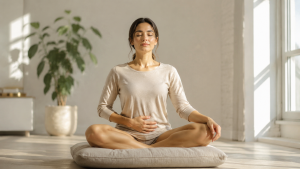
When most people hear "meditation," they picture sitting cross-legged with eyes closed for an hour. The reality is that effective meditation for stress relief can be as short as 5 minutes a day, and it doesn't require any special posture. The goal is not to empty your mind - that's a myth. The goal is to notice when your mind wanders and gently bring it back to a chosen anchor, like your breath or a phrase.
Research from Johns Hopkins University found that mindfulness meditation can reduce anxiety, depression, and pain, but the effect sizes are modest. It's not a magic bullet. What it does is train your attention and your ability to observe thoughts without getting caught up in them. Over time, this reduces the emotional reactivity that fuels chronic stress.
The technique I recommend most for beginners is focused attention meditation. Set a timer for 5 minutes. Sit in a comfortable chair with your feet flat on the floor. Close your eyes and focus on the sensation of breathing at your nostrils or your abdomen. When a thought arises - and it will - simply label it "thinking" and return to the breath. Don't judge yourself. This is the whole practice.
Most people give up after a few days because they expect immediate calm. The first week often feels more restless than relaxed - you're suddenly noticing how noisy your mind is. That's normal. The benefit comes after 2-3 weeks of daily practice, when you start to notice that you're less reactive to stressors throughout the day. If you're a Slow Builder type, this is your primary tool. If you're a Quick Responder, you might find meditation too passive; consider moving meditation instead.
Yoga and Tai Chi: The Power of Mindful Movement
For people who struggle to sit still, yoga and tai chi offer a way to combine physical movement with mental focus. These practices are not just exercise - they explicitly incorporate breath with movement, which is why they're so effective for stress. A 2018 review in the International Journal of Yoga found that yoga can reduce cortisol levels and improve HRV, a marker of stress resilience.
The key is to choose a style that matches your energy. Restorative yoga involves long holds with props and is deeply soothing - great for Active Releasers who need to slow down. Vinyasa or power yoga is more athletic and can help burn off excess adrenaline - better for Quick Responders who feel restless. Tai chi is slower and more meditative, with flowing movements that require concentration. It's particularly useful for older adults or anyone with physical limitations.
I've seen clients who claim they "can't do yoga" because they're not flexible. That's like saying you can't read because you don't know every word in the dictionary. You don't need to touch your toes to benefit. A simple 10-minute sequence of cat-cow, child's pose, and downward dog can release tension in your back and shoulders. The breathing is what makes it stress-relieving, not the contortions.
One mistake I often see is treating yoga as just another workout - rushing through poses to get your heart rate up. That defeats the purpose. The stress-relief benefit comes from slowing down and coordinating breath with movement. If you're not breathing steadily, you're just doing stretching exercises.
Progressive Muscle Relaxation (PMR) - The Full Version
The condensed PMR I described earlier is for acute stress, but the full version is a powerful long-term practice for people who hold chronic tension in their bodies. It involves systematically tensing and relaxing each muscle group from your toes to your head, usually taking 15-20 minutes. You can find guided recordings online, or you can do it yourself with a script.
PMR is particularly effective for people who have trouble recognizing when they're tense. Many chronic stress sufferers don't realize their shoulders are hunched until someone points it out. PMR trains you to notice the difference between tension and relaxation, which makes you more aware of stress buildup during the day. Over time, you'll catch yourself clenching your jaw and release it automatically.
I recommend doing PMR before bed if sleep is a problem. It's one of the best non-pharmacological interventions for insomnia. A study from the Journal of Clinical Sleep Medicine found that PMR improved sleep quality in older adults with insomnia. The key is to be consistent - three times a week minimum, ideally daily for the first month.
Visualization and Guided Imagery
Visualization involves imagining a peaceful scene - a beach, a forest, a mountain stream - in vivid detail. It works by engaging the same neural networks that are active during the actual experience, which can trigger a relaxation response. It's a good option for Variety Seekers who enjoy creative mental journeys.
The biggest mistake is using generic imagery that doesn't resonate with you. If you've never felt calm at a beach, visualizing one won't help. Instead, choose a place where you've actually felt relaxed - even if it's your grandmother's kitchen or a quiet library. Include sensory details: what do you see, hear, smell, feel? The more specific, the better.
You can also combine visualization with breathing: in on a positive image, out on a negative one. Some people find it helpful to imagine stress leaving their body as a dark cloud during the exhale. This is a simple but effective technique that I use with clients who are highly visual.
However, visualization is not ideal for people who have experienced trauma, because it can trigger intrusive images. If that's the case, grounding techniques are safer and more appropriate.
The Overlooked Role of Social Connection
No discussion of relaxation techniques is complete without mentioning that human contact is one of the most powerful stress relievers we have. A hug from a trusted person, a phone call with a friend, or even petting a dog releases oxytocin, which counteracts cortisol. Research from Carnegie Mellon University found that social support buffers the effects of stress on the immune system.
This isn't a formal technique, but it's the foundation of stress resilience. If you're chronically stressed and isolated, no breathing exercise will fix that. Make time for meaningful social interaction - even a 10-minute conversation with a colleague about something non-work-related can lower your stress level. If you're an introvert, this might be draining, so choose your interactions wisely. Quality over quantity.
The Science: HRV, Cortisol, and What Actually Works
You don't need to become a physiologist to benefit from relaxation techniques, but understanding a bit of the science helps you choose the right ones and stick with them. Two key markers are heart rate variability (HRV) and cortisol.
HRV is the variation in time between your heartbeats. A higher HRV indicates that your nervous system is flexible and can shift between stress and relaxation smoothly. A lower HRV is associated with chronic stress and poor health. Many relaxation techniques - especially slow breathing and meditation - have been shown to increase HRV. You can measure your HRV with a smartwatch or a chest strap, but you don't need to obsess over the numbers. The trend is what matters.
Cortisol is the primary stress hormone. Acute stress causes a temporary spike, which is normal and necessary. Chronic stress keeps cortisol elevated, which can lead to weight gain, sleep problems, and immune suppression. Long-term practices like yoga and mindfulness have been shown to reduce baseline cortisol levels. A study published in the journal Frontiers in Psychology found that a 3-month yoga retreat significantly reduced cortisol and improved psychological well-being.
But here's the thing nobody tells you: the relationship between relaxation technique and physiological change is not linear. You might not see a drop in cortisol after a single session. The benefits accumulate over weeks. That's why consistency matters more than intensity. A 5-minute daily practice is far more effective than a 2-hour session once a month.
Another important insight is that some techniques work better for different people based on their baseline physiology. For example, people with high resting heart rate and blood pressure tend to benefit more from slow breathing, while people with high muscle tension benefit more from PMR. This is why the self-assessment quiz is so valuable - it helps you identify your dominant stress pattern.
One misconception is that relaxation techniques are a replacement for medical treatment. If you have severe anxiety, depression, or a trauma-related disorder, relaxation techniques can be a helpful adjunct, but they are not a cure. The American Psychological Association recommends cognitive-behavioral therapy for chronic stress. If you're considering medication or therapy, don't use relaxation as a delay - combine them.
Building Your 20-Minute Daily Micro-Routine
Now that you know which techniques work for different situations, how do you turn this into a daily habit? The answer is a 20-minute micro-routine that you can adapt based on your day. The goal is not to do all 20 minutes at once - it's to sprinkle small, intentional breaks throughout your day.
Here's a sample schedule that covers all the bases. Adjust it to fit your life.
- Morning (5 minutes): On waking, before you check your phone, do a physiological sigh - 2-3 cycles. This sets your nervous system for the day. Then, do 2 minutes of focused attention meditation on your breath. This helps you start from a calm baseline rather than reacting to the first email.
- Mid-morning (5 minutes): After you've been sitting for an hour, stand up and do a quick tension-release sequence: shrug shoulders, clench fists, release. Then, take a 2-minute walk around your office or home. Physical movement prevents tension from accumulating.
- Lunchtime (5 minutes): Eat your lunch away from your desk if possible. While you eat, practice mindful eating - focus on the taste, texture, and smell of your food. This is a form of mindfulness that also improves digestion.
- Afternoon slump (5 minutes): Around 3 PM, do a 4-7-8 breathing cycle (if you're not driving) or a 2-minute grounding exercise. This helps you avoid the caffeine-and-sugar crash that often comes with chronic stress.
- Evening (5 minutes): Before bed, do a full PMR or a guided body scan. This signals your body that the day is over and prepares you for sleep. If you have trouble sleeping, this is non-negotiable.
That's 25 minutes total, but you can trim it. The key is to anchor each technique to an existing habit - after brushing your teeth, before lunch, etc. This makes it easier to remember.
One mistake I see is trying to do all of this on the first day. Start with just one or two slots. For the first week, only do the morning and evening routines. Once those feel automatic, add the mid-morning and afternoon breaks. Habit formation takes time - be patient with yourself.
If you miss a day, don't spiral. Just resume the next day. The goal is not perfection; it's consistency over months.
Common Mistakes and How to Avoid Them
I've watched many clients struggle with relaxation techniques, and I've made my own mistakes too. When I first started meditating, I tried to sit for 20 minutes and ended up feeling frustrated and anxious. I learned the hard way that starting small is the only way to build a sustainable practice. Here are the most common pitfalls and how to avoid them.
Mistake 1: Expecting immediate results. Relaxation techniques are like exercise - you don't see muscle growth after one workout. If you're trying to lower chronic stress, give it at least 4-6 weeks of daily practice before judging effectiveness. If you're using a quick-fix for acute stress, you should feel some relief within 5-10 minutes. If not, you're using the wrong technique for the situation.
Mistake 2: Doing the technique while distracted. If you're doing deep breathing while scrolling through your phone, you're not actually doing it. Your mind needs to be on the breath, not on the screen. Put your phone in another room or at least turn it face down. I tell clients to treat these 5 minutes as a non-negotiable appointment with themselves.
Mistake 3: Using relaxation as a way to avoid problems. This is a subtle one. Relaxation techniques are not a form of procrastination. If you're using them to avoid dealing with a difficult conversation or a financial issue, they'll actually increase your stress in the long run because the underlying problem remains. Use relaxation to calm your nervous system, then take action on the real issue.
Mistake 4: Forgetting to breathe during the technique. This sounds silly, but many people hold their breath while doing PMR or grounding. Your breathing should remain steady and natural throughout. If you notice you're holding your breath, pause and take a few slow exhales to reset.
Mistake 5: Ignoring physical pain. If you have a chronic condition like fibromyalgia or a back injury, some relaxation techniques - especially yoga or PMR - may exacerbate pain. Modify them or choose alternatives like guided imagery or gentle breathing. Always listen to your body's signals.
The most important lesson is that relaxation is a skill, not a switch. You'll have good days and bad days. The goal is to become more aware of your stress responses and to have a toolkit ready for whatever comes.
When to Seek Professional Help
Relaxation techniques are powerful, but they have limits. If you're experiencing any of the following, it's time to talk to a mental health professional: persistent feelings of hopelessness, panic attacks that interfere with daily life, difficulty functioning at work or home, or thoughts of self-harm. Relaxation can be a complement to therapy, but it shouldn't replace it.
You might also consider biofeedback or neurofeedback, which are professional-guided techniques that use sensors to show you your physiological responses in real time. A therapist can help you learn to control your HRV or muscle tension with precision. These are not DIY approaches - they require a trained practitioner.
If you're already in therapy, mention your relaxation practice to your therapist. They can help you integrate it into your treatment plan and may suggest specific techniques based on your diagnosis.
Remember, the best relaxation technique is the one you'll actually do. If you hate sitting still, don't force meditation. If you love movement, try yoga or tai chi. The self-assessment quiz is a starting point, but your own experience is the ultimate guide. Try a few techniques, notice how your body responds, and build your personalized routine from there.
Stress is not going to disappear from your life, but your relationship to it can change. With the right tools, you can move from being overwhelmed to being in control. Start with one technique today - just five minutes - and see where it takes you.