The Problem With One-Size-Fits-All Movement Lists
When I first started working with clients who live with chronic pain, fatigue, and anxiety, I made the same mistake I see wellness professionals make constantly. I handed out a tidy list of "gentle exercises" - cat-cows, seated marches, shoulder rolls - and told everyone to do them daily. Almost all of them stopped within two weeks.
It wasn't because the exercises were wrong. Cat-cows and shoulder rolls are genuinely useful. The problem was that the list asked people to ignore how they felt in the moment and follow a script written by someone who wasn't in their body. A seated march feels nourishing on a Tuesday morning and exhausting on a Thursday afternoon, and no static list can account for that difference.
This article offers a different approach: energy-matching movement. Instead of a fixed menu of exercises, you'll learn to check your current state (fatigued, anxious, stiff, or open) and choose gentle movements that genuinely match where you are. You'll also get a starter menu of ten daily gentle movements you can mix and match. And you'll learn when the right answer is rest, not movement.
How Energy-Matching Movement Works
The core idea behind energy-matching is simple: your movement choices should be driven by your internal state at this moment, not by a calendar, an app, or a habit loop you built last month. Your nervous system, your musculature, and your metabolism all change from day to day, and your movement practice needs to respect that.
Three states matter most when you're planning gentle daily movement: low energy, high anxiety, and physical stiffness. Most people fall into at least one of these on any given day. And each state calls for a different kind of movement. Movement that helps when you're anxious is often wrong for when you're exhausted, and vice versa.
Why Your Internal Cues Beat External Metrics
Many fitness programs tell you to track reps, minutes, or heart-rate zones. Those metrics have their place, but they often override what your body is actually telling you. With energy-matching, the primary metric is how you feel. Your breath rate, your perceived effort, and your mood are more useful signals than a timer or a step count.
This is especially important for people with chronic illness, neurodivergent folks, and anyone who has had a complicated relationship with exercise. Being told to hit a number can trigger shame or overexertion. Internal cues give you permission to adjust in real time.
Low Energy Days: Movement That Recharges Instead of Drains
On low energy days, the hardest part is simply starting. But here is what I have learned after years of working with fatigued clients: moving gently for five minutes is often easier than forcing yourself to sit perfectly still. The trick is choosing movement that is uncomplicated and rhythmic, the kind you can do without thinking.
When I was dealing with a bout of post-viral fatigue a couple of years ago, I found that I could sway in place while waiting for my tea to steep. Those tiny moments of movement added up. By the end of the day, I had moved for twenty minutes without ever having a "workout" - and my joints and mood were better for it.
Best Movement Options for Fatigue
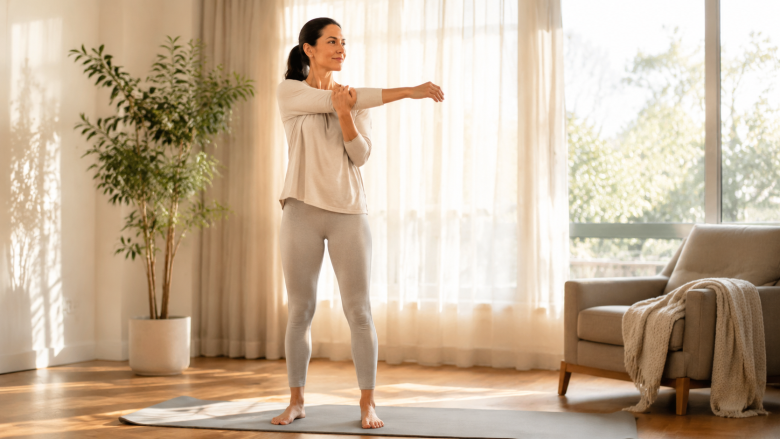
- Slow qigong swaying or "cloud hands": Keep your feet planted, let your hands drift side to side at hip height, and shift your weight slowly from one leg to the other. There is nothing to get wrong, and the repetition becomes a moving meditation.
- The rag doll fold: Standing at the edge of your bed or a chair, hinge forward at the waist with loose arms and let your head hang heavy. Stay for two or three slow breaths. This release for your lower back and hamstrings takes about a minute.
- Hip circles and shoulder rolls: Rest your hands on a sturdy surface, circle your hips slowly in both directions, then rotate your shoulders backward ten times. These target the two biggest joints most affected by sitting.
- Legs up the wall: Lie on the floor with your legs resting vertically against a wall. This is technically passive, but it shifts fluid in your body and resets your nervous system. Hold for five to ten minutes.
When your energy is truly low, skip anything that requires balance or concentration. You are better off with repetitive, predictable patterns. For a deeper look at building a daily walking habit that fits low-energy days, see our beginner guide to daily walking for wellness.
Anxious and Racing Thoughts: Movement That Grounds the Nervous System
When your thoughts are running at double speed, the last thing you want is complex choreography or a long list of instructions. Your cognitive bandwidth is already occupied. What your nervous system needs is movement that feels predictable, rhythmic, and safe.
Rhythmic rocking is one of the most underrated tools for anxiety. Whether you sit on a yoga ball, rock forward and back in a sturdy chair, or stand and shift your weight from heel to toe, the steady rhythm tells your brain that things are under control. It mimics the pattern of being soothed, which your nervous system recognizes at a deeply primal level.
Slow walking with nasal breathing is another option. Walk at a pace where you can easily breathe through your nose. Count your steps in sets of four. When your mind drifts, guide it back to the counting. This paired movement and breath practice is a moving meditation that many therapists recommend. If you want to pair movement with structured breath work, our article on how to practice breathing exercises daily covers the techniques in detail.
Specific Movements for the Anxious State
- Rocking on a yoga ball: Sit tall, hands resting on your thighs, and rock forward and back in a comfortable rhythm. Two to three minutes is enough to notice a shift.
- Heel-to-toe weight shifting: Standing with feet hip-width apart, shift your weight forward onto your toes, then back onto your heels, in a steady back-and-forth motion. Keep it slow.
- Butterfly hug movement: Cross your arms over your chest with your hands on your upper arms, and tap your hands alternately, one side then the other. This bilateral stimulation technique is borrowed from trauma therapy and works nicely as a self-soothing motion.
- Slow walking with breath counting: Inhale for four steps, exhale for four steps. Adjust the count so it feels comfortable. The key is that the breath stays easy.
Stiff and Achy: Movement That Restores Range of Motion
Stiffness usually comes from one of two places: too little movement over time, or too much of a single movement pattern (like sitting at a desk for nine hours). The fix in both cases is gentle, varied movement that takes your joints through a full range - but slowly and without forcing.
Here is something most people don't realize: it is not about how far you can reach. It's about the quality of the movement. Speed through a shoulder circle and you will re-tighten the very muscles you're trying to release. Slow down, and the connective tissue gets a signal to let go.
Mobility-First Movements for Stiff Days
- Cat-cow on hands and knees: Move slowly through the spine, letting your head and tailbone follow naturally. Ten repetitions with a breath at each end is plenty.
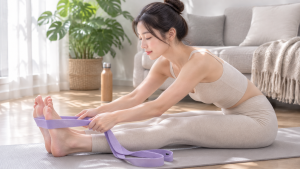
- Chair-based hip openers: Sit at the edge of a chair, lift one knee toward your chest, and circle it gently outward. Then switch sides. This moves the hip joint through its largest range without needing floor work.
- Wall-supported calf raises: Place your hands flat against a wall, step one foot back, and slowly press your heel into the ground. Hold for twenty seconds, switch sides. This is a gentle calf stretch that also addresses stiffness from walking or standing.
- Spinal twists in a chair: Sit sideways on a chair, twist your torso toward the backrest, and rest your hands on it. Breathe for five counts, then switch sides.
The essential daily movements most practitioners recommend are the ones that keep your joints mobile, your blood flowing, and your nervous system calm. These are exactly that.
The Play Factor: Why Unstructured Movement Counts
Most articles about movement treat it as a category of work. You do your reps, you check the box. But some of the most effective gentle movement doesn't look like exercise at all. It looks like playing, fidgeting, or dancing in your kitchen.
I remember the first time I let go of the idea that movement needed to be "structured" to count. I was sitting with a client who told me she hated every exercise video she had ever tried. I asked what she enjoyed doing as a kid. She said, "Skipping and dancing." So we spent the session skipping across the living room and dancing to one song. She moved for forty minutes straight. That was the first time she had exercised - and enjoyed it - in years.
Rhythmic swaying, bouncing on the balls of your feet, swinging your arms, spinning slowly in a circle - these all count as gentle daily movement. They're particularly valuable for neurodivergent people who find traditional exercise boring or overwhelming. The key is that the movement is self-directed and ungraded. Nobody is scoring your form. You are just letting your body move in ways that feel good.
Ten Gentle Daily Movement Ideas: Your Starter Menu
Here is a practical menu of ten gentle daily movement ideas. Each one is deliberately small, and all of them can be done in five minutes or less. You can combine two or three of them on any given day.
- Slow qigong swaying (cloud hands): Two to three minutes of weight shifting and arm drifting.
- Three-minute kitchen dance: Put on a song you love and move freely. No form required.
- Chair-based hip circles and shoulder rolls: Five circles each direction, ten shoulder rolls both ways.
- Cat-cow stretches on hands and knees: Ten slow repetitions with full breaths.
- Gentle walking with nasal breathing: Ten minutes at a pace that allows easy nose breathing.
- Rhythmic rocking on a yoga ball or chair: Two minutes of steady rocking for nervous system regulation.
- Wall-supported calf raises: Twenty slow repetitions, pressing the heels down gently.
- Legs up the wall: Five to ten minutes of passive rest for your lower body.
- Slow spinal twists in a chair: Five breaths on each side.
- Light foam rolling: Anywhere that feels tight - glutes, back, or thighs - for two minutes per area.
These are examples of gentle exercises that require no equipment, no gym membership, and no special clothing. They are the essential daily movements that most experts agree support long-term mobility and joint health.
Building Your Personal Movement Decision Tree
Here is the framework I use with my own clients. It is a simple decision tree with a series of questions you ask yourself before moving. The answers guide you to the right movement for that specific day. This bridges the gap between clinical exercise and intuitive self-care, and it works for chronically ill, neurodivergent, and perfectly healthy people alike.
Step 1: Check Your Dominant State
Pause for ten seconds and ask: what is the loudest signal in my body right now? Choose one that dominates, even if others are present.
- Fatigued, heavy, or low energy
- Anxious, racing thoughts, or restless
- Stiff, achy, or sore
- Balanced, curious, or open
Step 2: Match to Movement
Use the matchups below as your guide:
- Fatigued: Pick from the low energy list. Swaying, rag doll fold, legs up the wall.
- Anxious: Pick from the grounding list. Rhythmic rocking, slow walking with breath counting, butterfly tap.
- Stiff: Pick from the mobility list. Cat-cow, chair twists, hip openers.
- Balanced: You get the most freedom. Choose whatever sounds appealing, including play-based movement like dancing or skipping.
Step 3: Check Your Breath and Stop Signals
During the movement, check in: is my breath still easy? Does the movement feel like a release or does it feel like effort? If your breath becomes short or the movement feels like a chore, switch to something smaller or take rest.
Step 4: Debrief for 30 Seconds
After you finish, note how you feel. Did it help? Did it make things worse? This one-second journaling builds the self-awareness that makes energy-matching progressively easier over time.
This is what sets energy-matching apart from static lists. It gives you a process for making a decision, not just a set of exercises to copy.
Common Mistakes I've Made (So You Don't Have To)
As someone who has both taught and practiced gentle movement for years, I have stumbled plenty of times. Here are the mistakes I see most often - and that I have made myself.
Mistake 1: Treating Consistency as a Rigid Rule
There is a popular idea that you must move every single day, no exceptions. I believed this for years and pushed clients through low energy days. The result? They resented movement, and so did I. Consistency is important, but flexibility is what keeps you consistent over the long term.
Mistake 2: Confusing Activity with Effort
Just because a movement is "gentle" doesn't mean it's restorative. If you are forcing a stretch or pushing through a painful range of motion, you are doing damage, not healing. Gentle movement should feel like a release, not a grind.
Mistake 3: Skipping the Rest Days Entirely
Rest is not a failure. There will be days when the right answer is to lie on the floor, breathe, and do nothing else. The thing nobody tells you about gentle movement is that it works best when you also give your body permission to be still.
When Rest Is the Right Movement
There are some days when movement is genuinely the wrong answer. If you are in the acute phase of an injury, running a fever, or experiencing a pain flare that doesn't ease with two minutes of gentle motion, rest wins. No movement practice should override your body's emergency signals.
This is where gentle movement connects to a broader self-care practice. Building rest into your routine alongside movement is what makes both sustainable. Our guide to a gentle daily self-care routine for busy weekdays covers how to structure rest, hydration, and nourishment alongside movement.
When you do rest, do it deliberately. Lie down. Close your eyes. Notice your breath. That is not laziness. That is your nervous system regulating. And it will make your next movement session more effective, not less.
Making Gentle Daily Movement Actually Stick
The frameworks and lists in this article only help if you use them. Here is a simple way to start: pick one movement from the menu, and commit to doing it once today, at whatever time feels easiest. Tomorrow, ask yourself the four questions again. Don't plan a weekly schedule. Let your daily state guide you.
This is not a perfect system, and it does not need to be. Some days you will choose wrong, and that is information, not failure. The goal is not to become a person who exercises flawlessly. The goal is to become a person who knows how to listen to their body and respond with honesty and kindness.
For most people, gentle daily movement is not about transforming your body. It is about maintaining a relationship with your physical self that is respectful, responsive, and sustainable over decades. That is the real win.